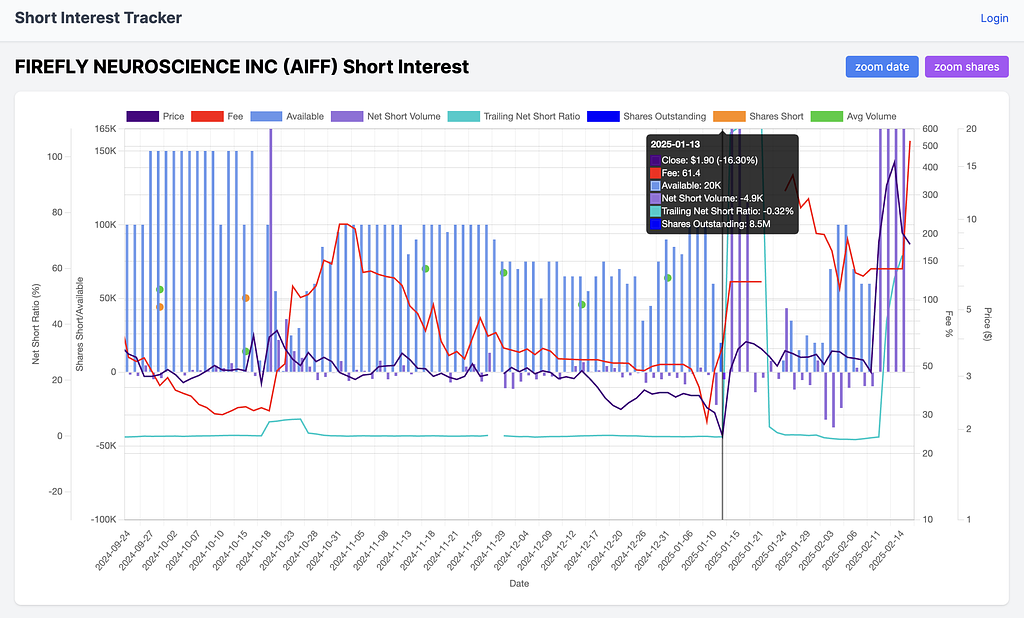
Short interest isn’t just another stock market metric—it’s a potential goldmine for traders looking to catch explosive moves. When short sellers pile in, betting against a stock, they create a ticking time bomb. The moment sentiment shifts, these positions can unwind fast, triggering massive price spikes.
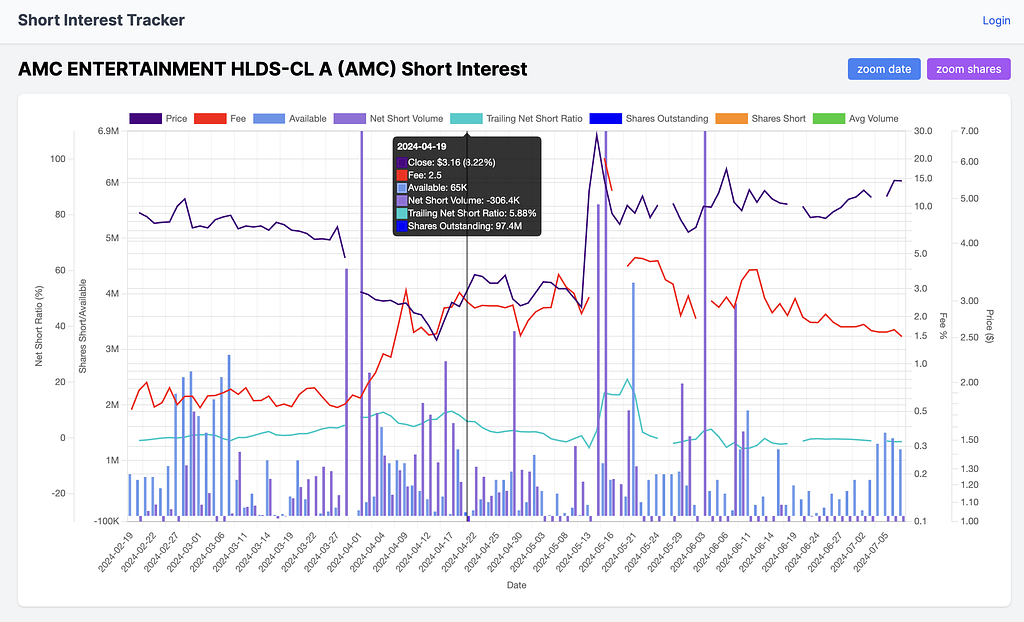
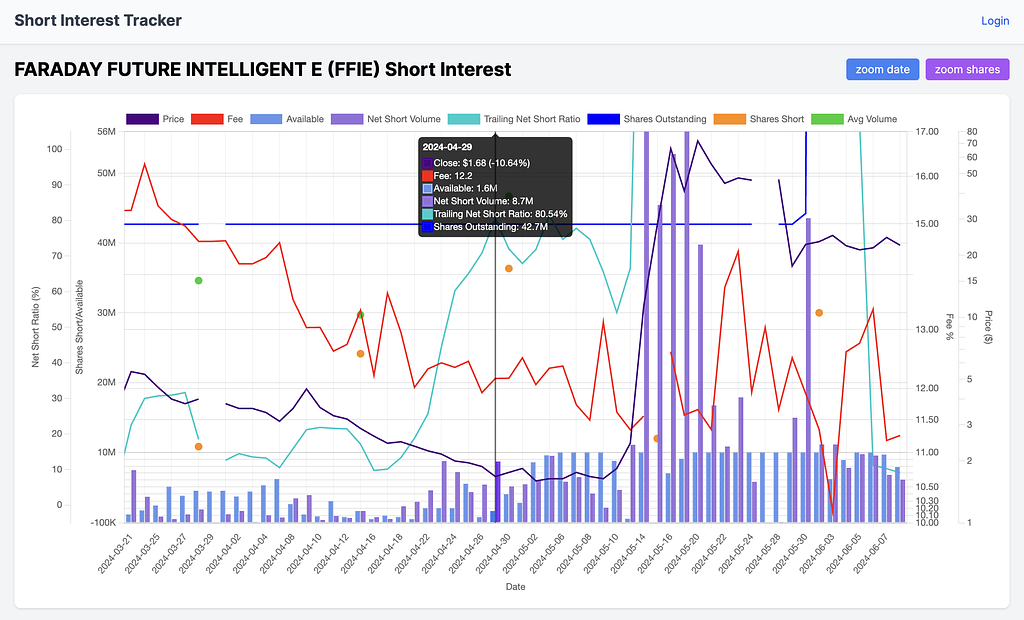
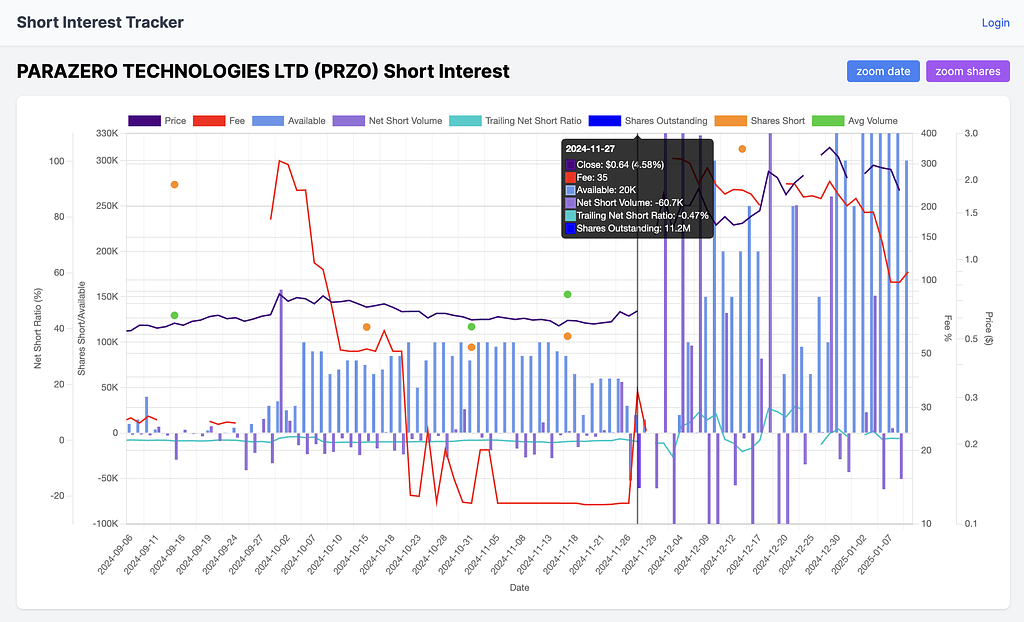
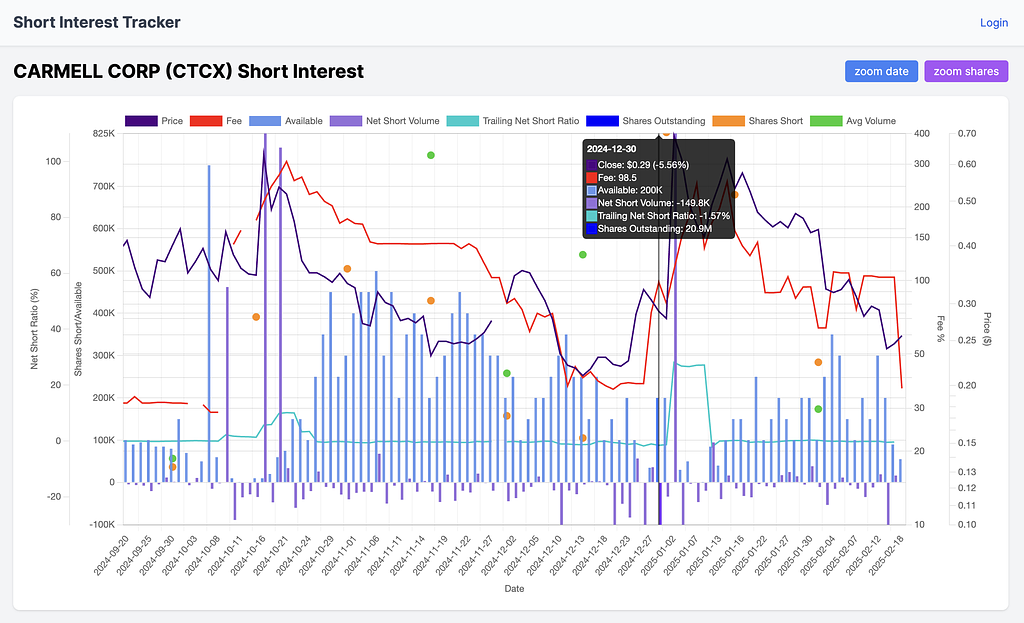
By tracking key short interest metrics—borrow fees, availability, and short ratios—you can spot stocks primed for a squeeze before the fireworks begin. Let’s break down real-world cases where shifts in these indicators signaled massive price surges.
Key Short Interest Metrics
Data from shortinteresttracker.com highlights four crucial indicators:
Borrow Fee Rate – The cost short sellers pay to borrow shares. Rising fees can signal mounting pressure.
Share Availability – The number of shares available to short. When this shrinks, short sellers may struggle to maintain positions.
Trailing Net Short Ratio – The percentage of outstanding shares sold short. The higher this number, the greater the potential for a squeeze.
Net Short Volume – The amount of shares being shorted in a given period. A spike in short volume can indicate increasing bearish bets.
Now, let’s dive into some real-world case studies where these signals led to jaw-dropping price movements.
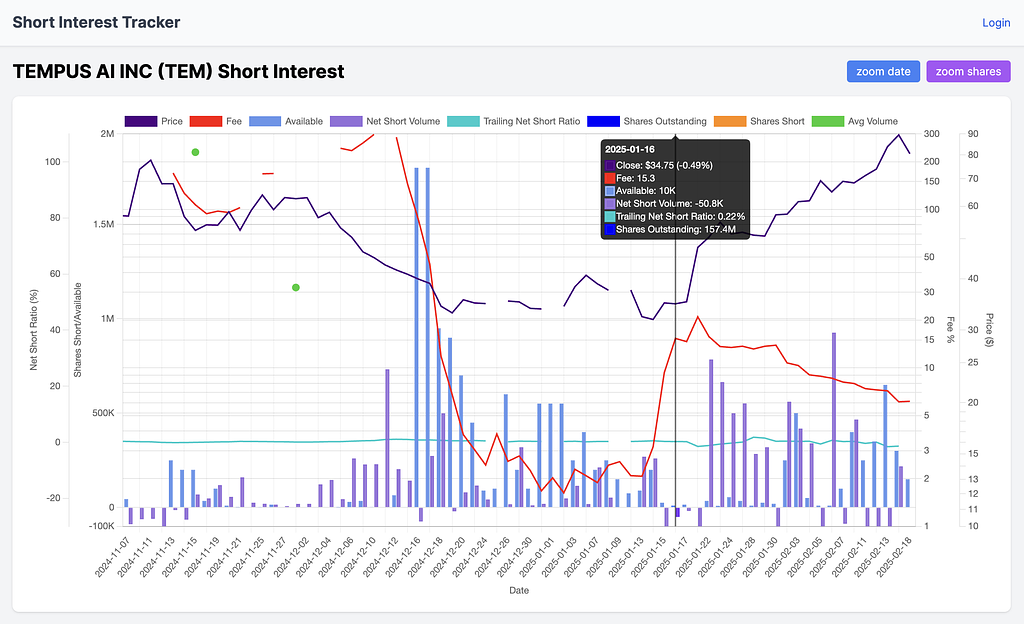
TEM’s move was more gradual but still impressive:
TEM Short Interest
Borrow fees steadily climbed
Share availability declined over time
The stock gained 150% over a month
Not all short squeezes happen overnight—some build up over time as pressure slowly mounts.
How to Spot the Next Big Squeeze
Based on these case studies, here’s what to watch for:
Rapid Borrow Fee Increases – Often the first sign that shorts are in trouble.
Falling Share Availability – A shrinking supply of shares can squeeze short sellers.
High Short Interest (>20%) – The higher the percentage of shares sold short, the bigger the potential upside.
Multiple Indicators Aligning – The strongest setups occur when several factors come together.
Market Conditions – Squeezes are more likely in bullish environments where momentum fuels the move.
The Risks of Trading Short Squeezes
While short squeeze setups can deliver eye-popping gains, they come with serious risks:
Timing is Difficult – Predicting exactly when a squeeze will trigger is nearly impossible.
False Signals – Rising borrow fees or decreasing availability don’t always lead to a squeeze.
Volatility is Extreme – These stocks can spike, then crash just as fast.
Short-Lived Moves – Most squeezes fizzle out once short covering is done.
Fundamental Red Flags – Many heavily shorted stocks have real business problems.
How to Screen for Squeeze Candidates
Shortinteresttracker.com provides tools to track:
Borrow fee increases
Share availability drops
Stocks with high short interest ratios
Unusual short volume activity
Setting alerts for major shifts in these indicators can help traders catch short squeezes before they take off.
Conclusion
Short squeezes can deliver life-changing gains when spotted early, as seen with AMC, FFIE, PRZO, CTCX, AIFF, and TEM. But they require careful monitoring of short interest metrics, a solid understanding of risk, and impeccable timing.
Not every stock with high short interest will explode, and many heavily shorted names never squeeze at all. That’s why thorough research, risk management, and discipline are essential when trading these setups.
By leveraging tools like shortinteresttracker.com, traders can identify high-probability squeeze candidates while staying ahead of market-moving trends.